
What is your car telling you?
A noise, a shake, a warning: here is what each common symptom usually means, what you can check yourself, and what to do next. Walk in informed and drive with confidence.
Car Won't Start
The most common cause is the battery, but the sound it makes points you to the answer.
What it meansPull over when safeCar Overheating
An overheating engine is one to take seriously right away, because heat causes damage fast.
What it meansGet it checked soonGrinding Noise When Braking
A grinding noise usually means the brakes need attention soon, since stopping is not optional.
What it meansNote when it happensCar Shaking While Driving
When the shake happens tells you a lot: at speed, when braking, or at idle each point somewhere different.
What it meansTell thin vapor from thick smokeWhite Smoke From Exhaust
Thin white vapor on a cold morning is normal. Thick, steady white smoke is worth looking into.
What it meansWorth addressing, not urgentCar Pulls To One Side
A steady pull is usually alignment or tires, and it wears your tires faster the longer it goes.
What it meansComfort issue, not a safety oneAC Blowing Warm Air
Most warm-air AC comes down to low refrigerant, and the cause of the loss matters as much as the top-off.
What it meansGet it checked before it becomes a breakdownSquealing Noise On Startup
A squeal at startup is usually the serpentine belt or its tensioner, and it is telling you before it strands you.
What it meansHead somewhere useful, not somewhere farBattery Light On While Driving
That light usually means the charging system quit and you are running on borrowed battery time.
What it meansWorth diagnosing soonRough Idle
A rough idle is the engine struggling at its easiest job, and the usual suspects are spark, air, and fuel.
What it meansIdentify the smell, then actBurning Smell After Driving
The kind of burning smell tells the story: oil, rubber, sweetness, or hot metal each point somewhere different.
What it meansSchedule it, and skip long trips until thenSteering Wheel Shakes At Highway Speed
A shimmy that shows up around 60 mph is usually the tires talking, and balancing fixes most of them.
What it meansIn the app
Turn a symptom into an answer
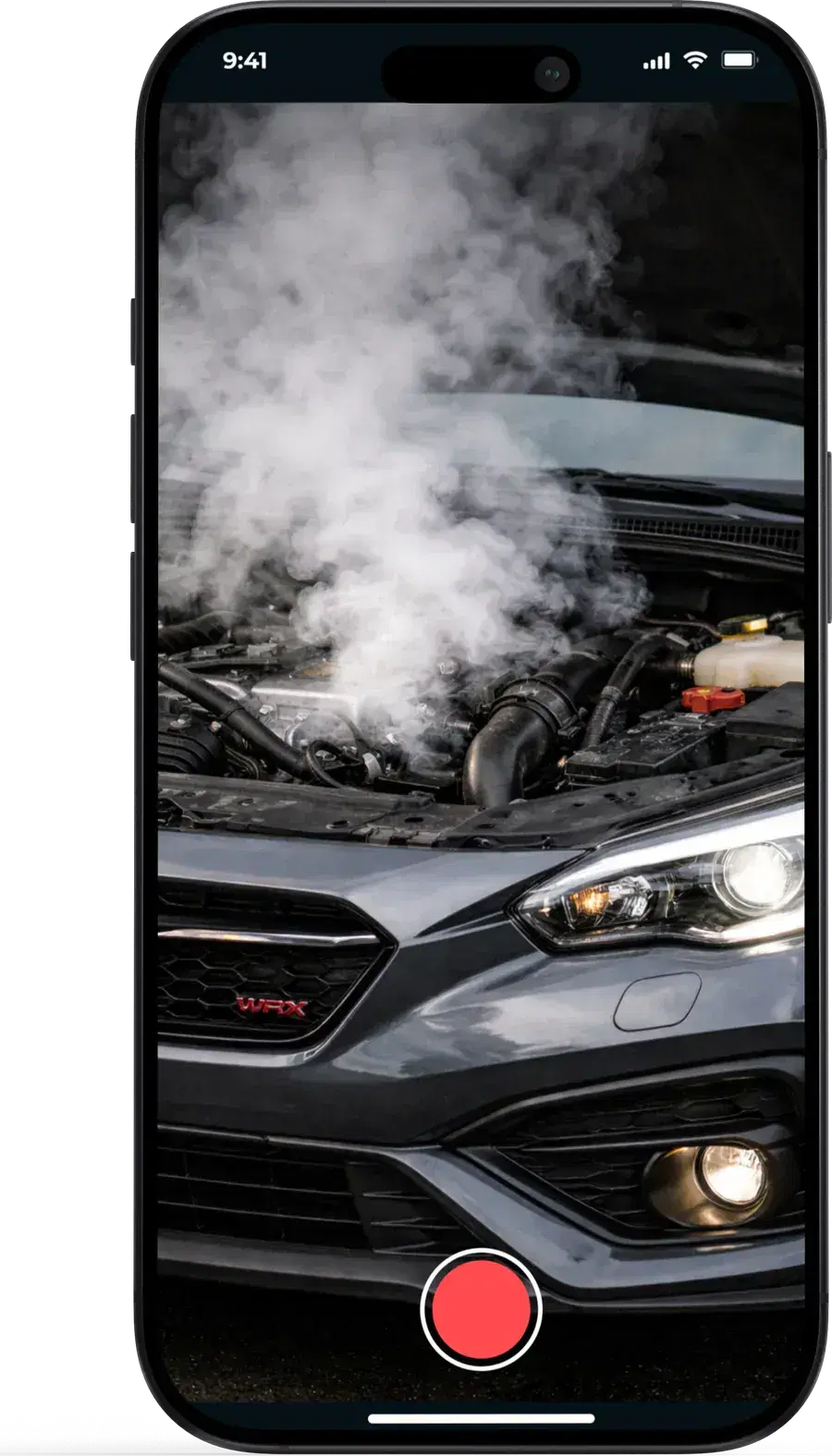
A symptom narrows it down. Record a short video of the problem in the Fixxr app and get the likely causes, or decode a trouble code to go the rest of the way.
Car symptom FAQ
Common questions
Is it safe to keep driving with a warning light or strange symptom?
It depends on the symptom. A steady check-engine light is usually fine for a short trip to get it checked, while a flashing check-engine light, a temperature gauge in the red, or a brake warning means you should stop as soon as it is safe. Each symptom guide here tells you how urgent that specific issue is.How do I describe a car symptom to a mechanic?
Be specific about when it happens: at what speed, hot or cold engine, braking or turning, and what it sounds or feels like. A short video or recording of the noise is even better. The more detail you give, the faster and more accurately a shop can pinpoint the cause.Can I figure out what is wrong with my car myself?
Often you can narrow it down. Matching your symptom to its common causes, checking a few simple things, and reading any trouble code gets you most of the way. Fixxr can turn a short video of the problem into likely causes, so you walk into a shop already understanding the conversation.What should I do first when my car does something unusual?
Note exactly what changed and when, check for any dashboard warning light, and avoid driving hard if the car feels unsafe. Then match the symptom here to understand the likely cause and how urgent it is, so you can decide whether to book a repair now or keep an eye on it.
You deserve a fair fix.
Diagnose, post, best repair comes to you